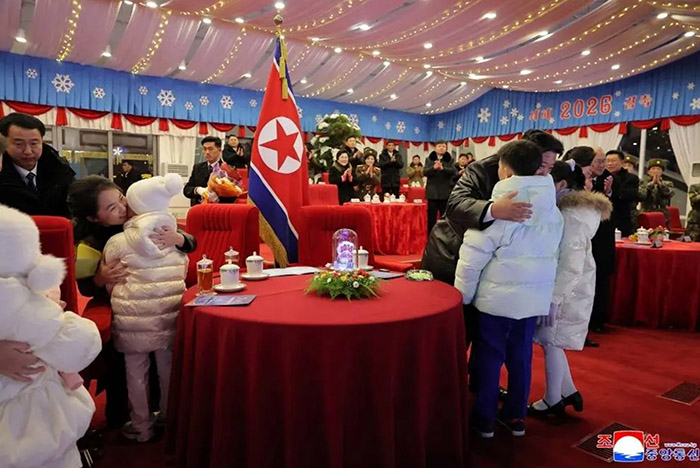
Taken together, the celebration was not merely a festive occasion but a multi-layered political statement—one that highlighted North Korea’s internal priorities, leadership continuity, evolving foreign alliances, and strategic vision for the years ahead.
A Carefully Orchestrated Celebration in the Capital
The New Year celebrations in Pyongyang followed a familiar but highly symbolic format. Fireworks illuminated the night sky over the capital, a visual metaphor often used by the regime to project strength, stability, and optimism. Patriotic songs and dances, performed by mass ensembles, reinforced themes of national unity, loyalty to the leadership, and pride in the country’s perceived achievements.
The inclusion of a taekwondo demonstration was particularly noteworthy. Taekwondo, widely promoted by North Korea as a national martial art and cultural heritage, frequently features in state events as a symbol of discipline, physical strength, and ideological purity. By showcasing it during the New Year celebrations, the regime emphasized not only cultural pride but also the physical and moral resilience it seeks to associate with the North Korean people.
State media coverage focused heavily on Kim Jong-un’s demeanor—confident, relaxed, and attentive—as he observed the performances. KCNA photographs and descriptions portrayed him as a benevolent and engaged leader, a recurring narrative in North Korean propaganda that seeks to humanize Kim while reinforcing his authority.
Check Also
Katie Zaccaria: The New Face at the White House Podium
Kate Sharon Black Zacharia is an American political communications professional, former government official, political commentator, …