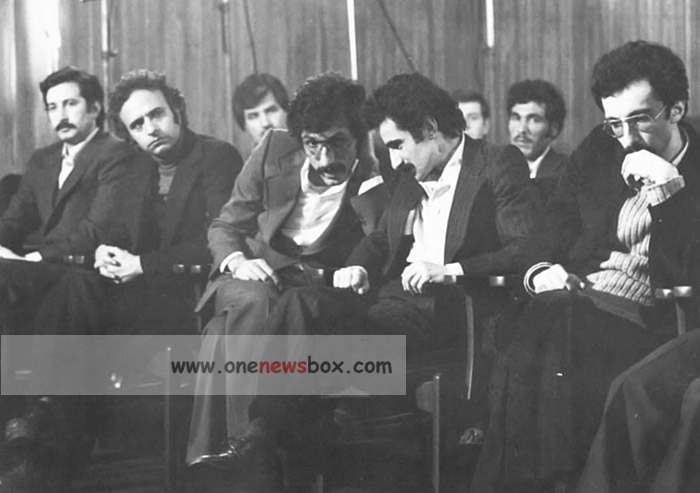
Following the coup of 1953 and the repression of 1963, which led to the consolidation of the Pahlavi regime, the idea of armed struggle rose among the militant forces, both religious and Marxist. Both factions, relying on their historical background and mentality, came to terms with this approach and therefore tried to rely on previous experiences, in the face of repression and subjugation within the country, to resort to armed struggle and violence as the only way to confront the imperial government. In his book Iran Between Two Revolutions, Yervand Abrahamian lists the total number of guerrilla deaths from 1960 to 1978 as 341. This figure includes all those who lost their lives in conflicts, executions, suicides, and torture.
In fact, the main causes of this movement were: Disillusionment with past political and conservative struggles
The intensification of the atmosphere of repression and dictatorship by the Pahlavi monarchy
The strong impact of the victory of liberation movements in Cuba and Algeria and the escalation of the Vietnam War
Guerrilla groups in Iran (before the 1978 Revolution)
The People’s Iranian Revolutionary Guard Corps (Fedai Guerrilla Organization)
The People’s Mojahedin Organization of Iran (Muslim Mujahedin)
The Organization for the Struggle for the Liberation of the Working Class (Marxist Mujahedin)
Small and secret Marxist cells such as the Palestine Group, the Arman Group People
Small Islamic groups such as the Al-Fajr group, the Abu Dhar group, the True Shiites group, and the Allahu Akbar group.
In the discussion of the guerrilla movement, three organizations stand out both quantitatively and qualitatively. Other small groups were also active, but it was these three that played the dominant role. These groups were: the People’s Organization of Iran’s Devotional Guerrillas, the People’s Mojahedin Organization of Iran, and the Marxist Mojahedin Organization (later the Organization of the Struggle for the Liberation of the Working Class).