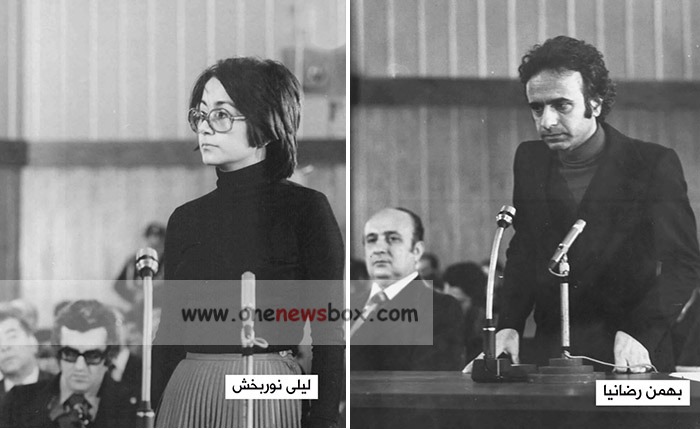
The groups started to overlap in 1970, with the first armed attack being a robbery of a bank in Tehran in order to bankroll the new organization. By the end of the year, the group was unified and had a three-cell structure. An “urban team,” a “publication team,” and a “rural team.”Ideologically, the group pursued an anti-imperialist agenda and embraced armed propaganda to justify its revolutionary armed struggle against Iran’s monarchy, and believed in Materialism. They rejected reformism, and were inspired by the thoughts of Mao Zedong, Che Guevara, and Régis Debray.
They criticized the National Front and the Liberation Movement as “Petite bourgeoisie paper organizations still preaching the false hope of peaceful change”.[4] Fedai Guerrillas initially criticized the Soviet Union and the Tudeh Party as well, however they later abandoned the stance as a result of cooperation with the socialist camp.
Bijan Jazani, known as the “intellectual father” of the organization, contributed to its ideology by writing a series of pamphlets such as “Struggle against the Shah’s Dictatorship”, “What a Revolutionary Must Know” and “How the Armed Struggle Will Be Transformed into a Mass Struggle?”. The pamphlets were followed by Masoud Ahmadzadeh’s treatise “Armed Struggle: Both a Strategy and a Tactic” and “The Necessity of Armed Struggle and the Rejection of the Theory of Survival” by Amir Parviz Pouyan.