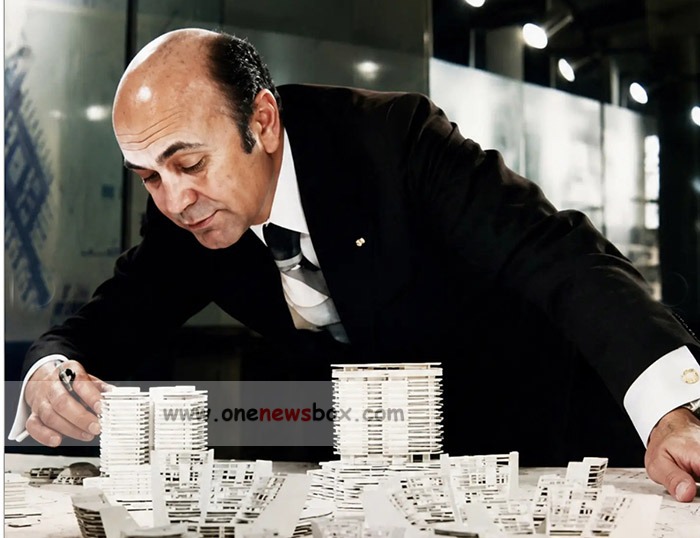
White or light-colored surfaces, regular grids, horizontal and vertical lines, and carefully organized geometric volumes were characteristic elements of his architecture. These features reflected the international architectural language that had developed in Europe and the United States during the first half of the twentieth century.
Yet Ghiaei’s architecture should not be understood simply as an imitation of European or American modernism. Some of his projects reveal an effort to respond to Iranian circumstances and to move beyond a completely uniform International Style. In several buildings, limited decorative elements, sculptural forms, and distinctive geometric compositions appear.
The Tabriz Railway Station provides an important example of this tendency. While the building belongs firmly to the modernist tradition, aspects of its design demonstrate an interest in localization and sculptural expression. Rather than relying exclusively on plain surfaces and standardized geometry, Ghiaei introduced elements that gave the building a more distinctive visual identity.