The appearance of the airport on currency demonstrates its symbolic importance during a period of modernization. Banknotes often feature landmarks, important buildings, and national achievements that represent a country’s history and development.
Airports symbolize technological progress, international communication, and economic growth. Including Mehrabad on Iranian currency reflected its position as a prominent example of the country’s developing transportation infrastructure.
The airport’s image on currency also highlights its significance beyond its practical function. It was not simply a place where aircraft arrived and departed; it represented a modernizing Iran that was investing in new forms of transportation and communication.
Architectural Development and Abdol-Aziz Farmanfarmaian
Architecture played an important role in the development of Mehrabad Airport. As passenger numbers increased, the airport required larger and more modern buildings to accommodate travelers and support increasingly complex operations.
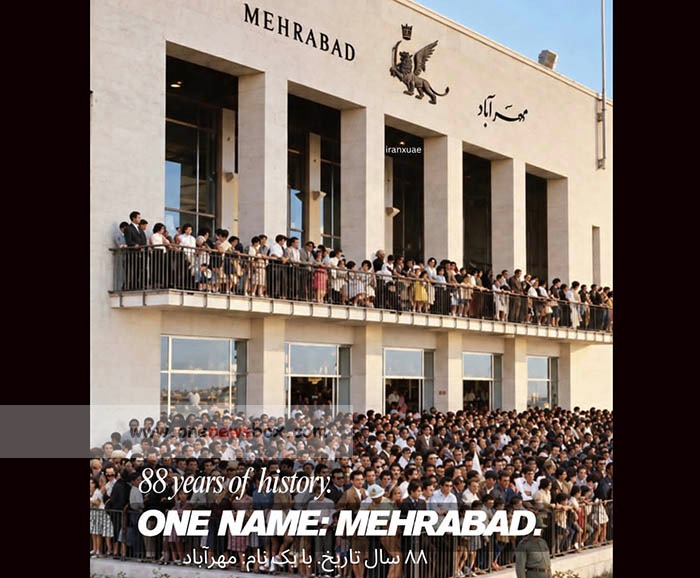
One of the most prominent architects associated with the airport was Abdol-Aziz Farmanfarmaian, a distinguished Iranian architect responsible for the design of Terminal 1. The terminal was designed and constructed in 1955, corresponding to 1334 in the Iranian Solar Hijri calendar.
Initially, Terminal 1 was used for both domestic and international flights. Its construction helped establish a more modern appearance for the airport and provided facilities suited to the growing demands of commercial aviation.