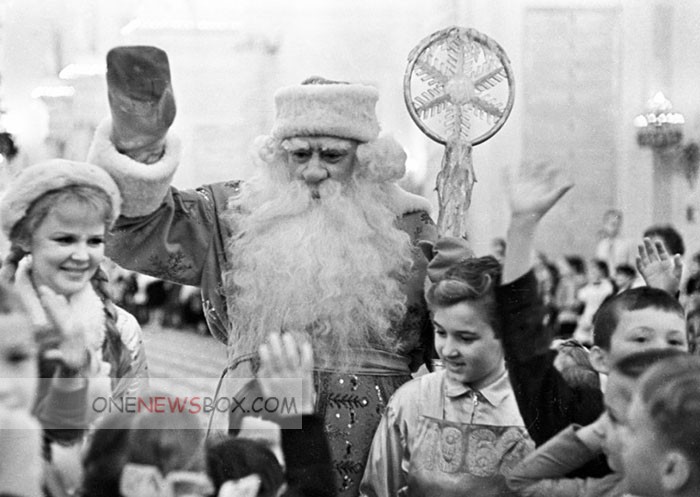
“The New Year has become so ingrained in the society,” says Izmirlieva, “it is unifying.” Plus, “It’s for those who are not Christian, those who are anti-Christian, or members of other religions. It is still very strong.”
Then, in 1917, exactly 100 years after Princess Charlotte dared to bring in a pine tree, came the Russian Revolution, ushering in the explicitly secular Soviet era.Initially, the Soviets tried to replace Christmas with a more appropriate komsomol (youth communist league) related holiday, but, shockingly, this did not take. And by 1928 they had banned Christmas entirely, and Dec. 25 was a normal working day.