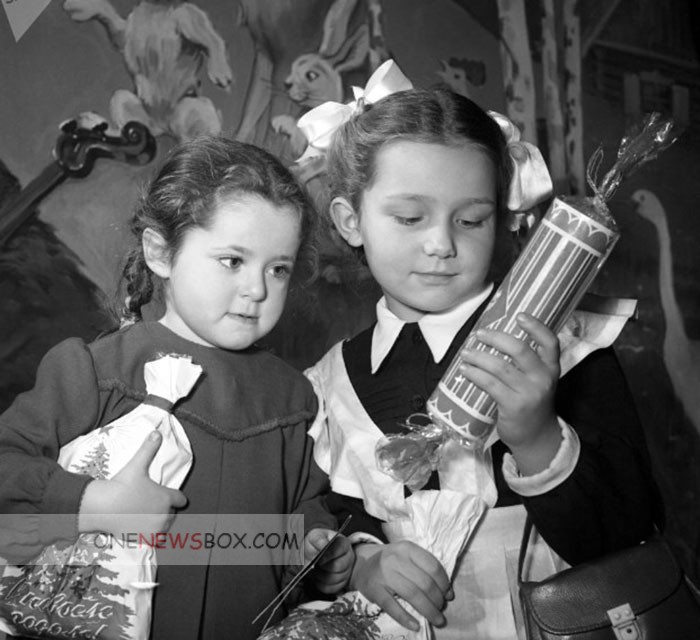
By the turn of the century, the elements were falling into place. There was a decorated Christmas tree, a Santa-like figure and gift giving, and Christian reinterpretations of pagan traditions, such as divination. (That still lives on, in a way: today, some Russians write their new year’s wishes on a piece of paper, burn the paper, and then drink the ashes in champagne.)
Then, in 1917, exactly 100 years after Princess Charlotte dared to bring in a pine tree, came the Russian Revolution, ushering in the explicitly secular Soviet era.Initially, the Soviets tried to replace Christmas with a more appropriate komsomol (youth communist league) related holiday, but, shockingly, this did not take. And by 1928 they had banned Christmas entirely, and Dec. 25 was a normal working day.