The climate of Tajrish is mild and tends to be cold. Its maximum temperature in summers is 36 degrees and its minimum in winters is -20 degrees. There have been many aqueducts in Tajrish and some of them are still providing water. Among them, the Imamzadeh Saleh aqueduct (its manifestation in the courtyard of the Imamzadeh), the Mohammadiyeh aqueduct, the Maqsoodbek aqueduct on the side of the Darband river, the Sarpol bridge aqueduct of Tajrish, and the Kahrizak aqueduct, whose manifestation was in the lower support of Tajrish. population The population of Tajrish was 26,525 tons in 1335, and about 40,000 in the 1365 census.
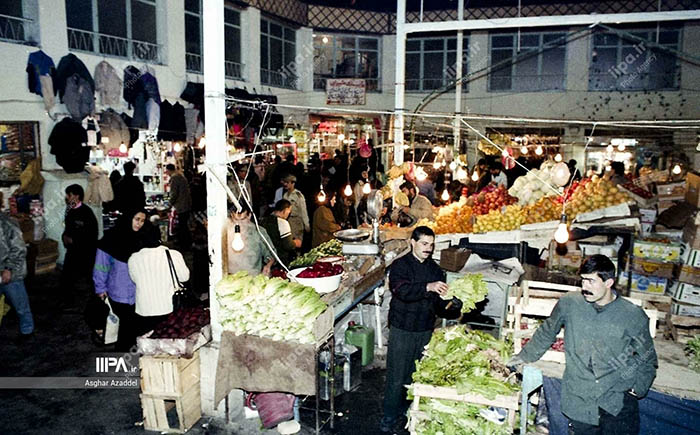
Until the 1920s, Tajrish and neighboring Shemiranat were a collection of small villages along Capital’s border. The area was relatively disconnected from Capital’s urban with the exception of Old Shemiran Road, currently known as Shariati Avenue. With the construction of Pahlavi Road (now named Valiasr Street) in 1930s and Modarres Highway, then known as Shahanshahi Boulevard, the Northern suburbs became highly accessible from downtown and rapid extension became possible.Popular tourist spots in Tajrish are the old bazaar and a mausoleum called Imam Zadeh Saleh.