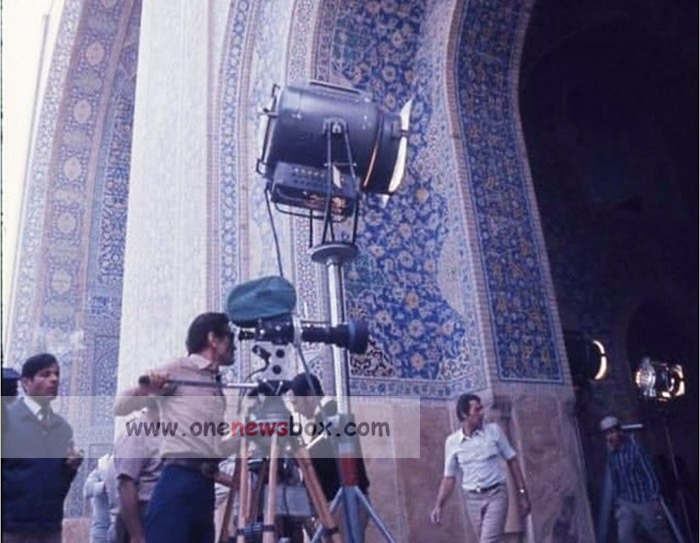
According to accounts of the episode, the presence of the actors and the nature of the filming provoked outrage among some people who discovered what was happening. A crowd gathered, and the atmosphere became threatening enough that the crew had to leave quickly. The filmmakers hurriedly packed their equipment and fled the mosque, transforming what had been intended as an artistic encounter with one of Iran’s most beautiful spaces into a chaotic escape.
The contrast is striking. In photographs, Isfahan can appear almost impossibly calm: empty courtyards, monumental walls, blue tiles catching the sunlight, and architectural forms that seem to have survived outside ordinary time. But filmmaking is never as quiet as a photograph. Behind every image there are people moving, equipment being carried, actors waiting, technicians shouting instructions, local residents watching, and cultural expectations colliding.
This contrast between stillness and movement is perhaps one of the most fascinating aspects of Pasolini’s Iranian journey.
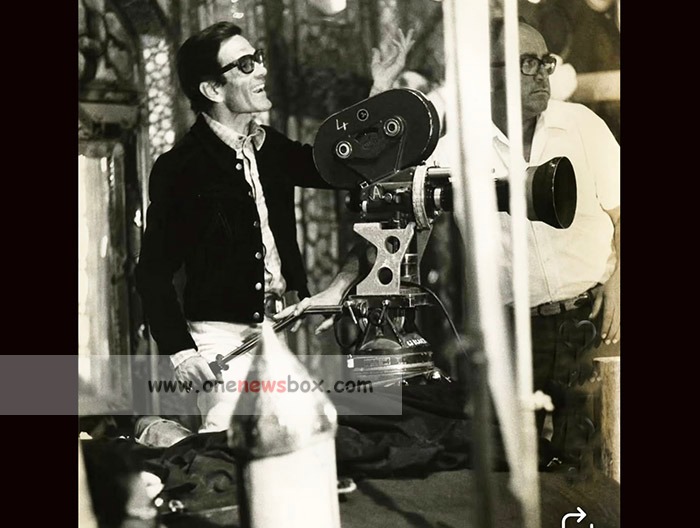
The photographs from the production offer glimpses of a filmmaker attempting to understand a new environment through observation. Pasolini was not a tourist in the conventional sense. He arrived with a specific artistic purpose, but his cinema depended heavily on his ability to look at the world around him. He was interested in ordinary people as much as monumental architecture. Faces could be as important as buildings. A street could be as meaningful as a palace. A gesture could carry as much emotional weight as dialogue.