This way of looking explains why his films often feel caught between documentary and fiction. Even when he was telling stories from distant historical or literary worlds, he wanted the physical world to remain present. Dust, sunlight, walls, bodies, streets, clothing, and expressions mattered. They gave his imaginary worlds a tangible reality.
Iran provided an extraordinary abundance of such material.
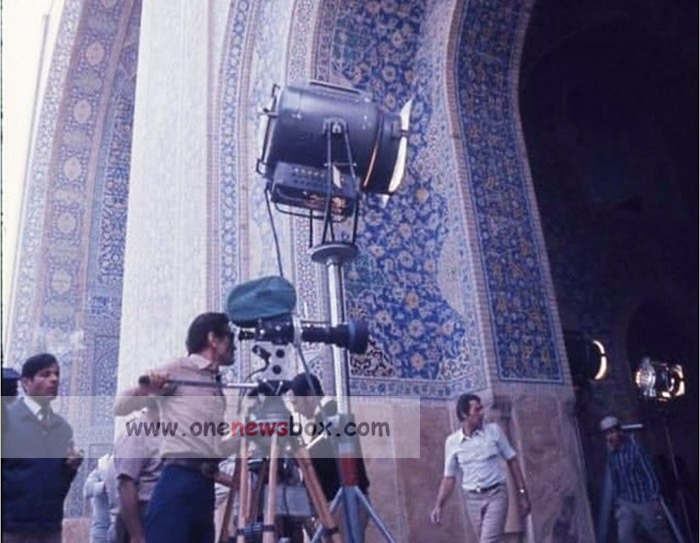
Isfahan, in particular, offered a visual vocabulary that was almost perfectly suited to Arabian Nights. The city possessed an architectural relationship with geometry and ornament unlike anything Pasolini could have found in Europe. Tilework transformed walls into enormous abstract compositions. Domes rose above the city like celestial objects. Courtyards created framed spaces within spaces, while narrow passages and markets offered a different, more intimate sense of movement.
The blue of the mosques must have been especially important to a filmmaker obsessed with the expressive possibilities of color. In Pasolini’s cinema, color was never merely decorative. It could establish mood, distinguish one world from another, or create an almost dreamlike distance between the viewer and the events on screen. In Iran, the architecture itself seemed already prepared for cinema.