One of the most significant cultural imports was the comedy show performed by “blacks” (siah-bazi) artists. Figures like Mehdi Masri and later Saadi Afshar became famous for painting their faces and performing sharp, humorous critiques of society in a way that ordinary Iranians could not openly express. Their role was to be both the fool and the truth-teller, making them central to the cabaret stage.
The Story of Saber Atashin and Googoosh
Perhaps no story illustrates the intertwined nature of Iranian cabaret and stardom better than that of Saber Atashin and his daughter, Googoosh.
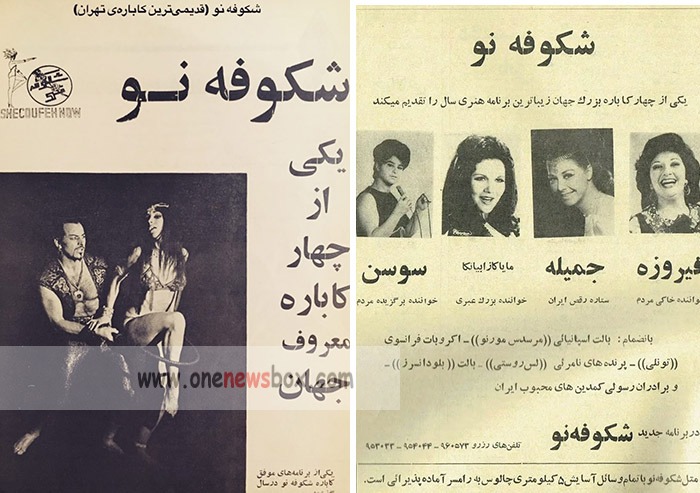
Saber, a comedian and performer, worked in Shokofeh Café some two decades after its founding. His performances, combining humor with music, attracted large audiences. What made his shows especially memorable was the participation of his young daughter, who, at the age of three or four, appeared alongside him.
This daughter, Googoosh, would later become one of the most iconic singers in Iranian pop history. But her first stage was not a concert hall or a state theater—it was the cabaret. Here she learned performance, timing, and the ability to engage audiences, skills that would serve her well in her later career as Iran’s most famous female star of the 1960s and 1970s.
The father-daughter act was a sensation and helped inspire other comedians and musicians to take part in cabaret shows. Soon, names such as Rama, Qasem Goli, the Rasouli brothers, and others joined the growing industry.