Conclusion
The funeral additionally highlighted the emotional dimension of aging political generations in Iran. Many of the personalities associated with the early decades following the 1979 Islamic Revolution are now entering later stages of life, and public ceremonies connected to these families increasingly carry historical weight for those reflecting on Iran’s political evolution over the past four decades.
For supporters of reformist politics, the Khatami family remains connected to memories of political participation, cultural openness, intellectual debate, and hopes for gradual reform within the system. For others, the family represents a respected clerical lineage rooted in Yazd’s religious traditions.
This combination of religious legitimacy, political history, and intellectual identity makes the Khatami family uniquely influential within Iranian public life.
As condolences continued circulating online, many people emphasized themes such as respect, dignity, religious tradition, and historical continuity. Others shared memories from Mohammad Khatami’s presidency and reflected on how deeply that period shaped their understanding of politics, society, and civic engagement.
The public response illustrated that Mohammad Khatami remains far more than a former president in the eyes of many Iranians. He continues to function as a symbolic figure connected to broader ideas of reform, moderation, dialogue, and cultural openness.
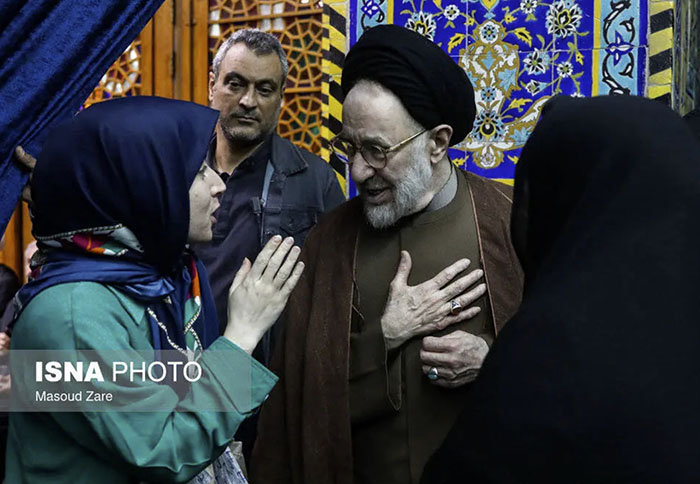
The funeral ceremony for Sayyida Hajiya Khadija Khatami therefore became both a personal family event and a moment of wider public reflection. It reminded many observers of the historical role played by the Khatami family in Iran’s religious and political development while also highlighting the emotional and cultural importance of mourning traditions within Iranian society.
As Iran continues navigating social, political, and generational change, families such as the Khatamis remain important symbols connecting the country’s revolutionary past, reformist aspirations, religious heritage, and evolving political identity.