Throughout his post-presidency years, Mohammad Khatami has maintained influence largely through symbolic leadership rather than formal political office. His public statements on elections, national unity, social stability, and reform continue receiving significant media attention.
Many reform-minded citizens still regard him as a symbol of moderation and political hope, especially among generations that experienced the reform movement during the late 1990s. This symbolic status contributes to the broad attention given to events involving the Khatami family.
The passing of Sayyida Hajiya Khadija Khatami also prompted broader reflection on the role women within prominent Iranian religious families have historically played behind the scenes. While less publicly visible than political figures themselves, women in clerical families often contribute significantly to preserving family identity, maintaining social networks, supporting educational traditions, and sustaining religious-cultural continuity within their communities.
Although relatively limited public information exists about Khadija Khatami herself, the respect shown during the ceremony reflected the family’s broader social standing and historical importance.
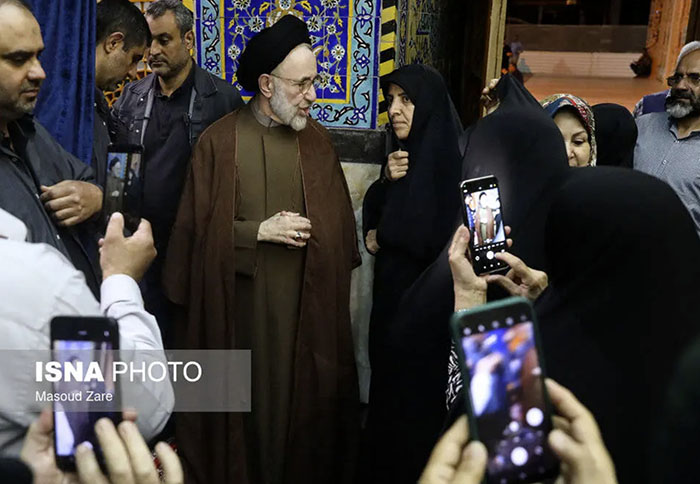
In many Middle Eastern societies, funeral ceremonies serve not only as religious obligations but also as moments of communal recognition and social memory. The gathering in Yazd reflected these traditions, bringing together multiple generations of political, religious, and cultural figures connected through history, ideology, or personal relationships.
The Rawzah Mohammadiyeh Mosque, where the ceremony was held, became the center of this collective mourning and remembrance. Mosques in Iran often function not only as places of worship but also as important social and community spaces where political, cultural, and religious life intersect.