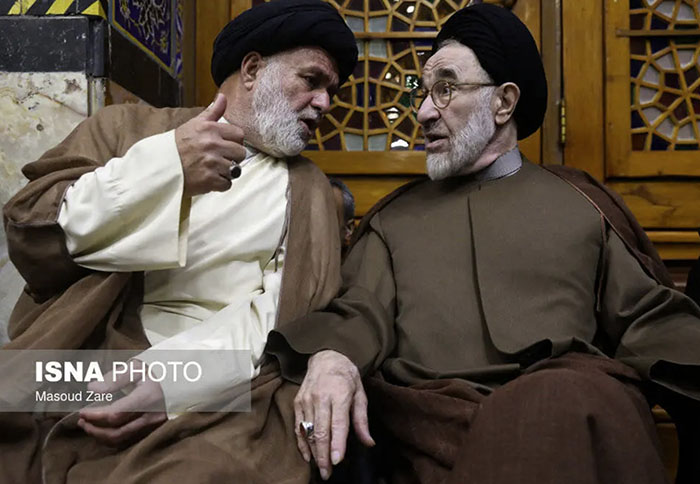
Because of this political legacy, events connected to the Khatami family often receive substantial public attention. Even personal family ceremonies can carry broader political and symbolic meaning due to Mohammad Khatami’s historical role in Iranian politics.
The city of Yazd itself also contributed to the significance of the funeral ceremony. Yazd is considered one of Iran’s most historically important religious and cultural centers. Known for its ancient architecture, mosques, seminaries, and religious heritage, the province has long played an important role in producing influential clerics, scholars, and intellectual figures.
The Khatami family’s roots in Yazd remain central to their public identity. Mohammad Khatami was born in Ardakan, a city in Yazd Province, and his father, Ayatollah Seyyed Ruhollah Khatami, served as one of the region’s leading clerics after the Iranian Revolution. Ayatollah Khatami became widely respected for both his religious scholarship and his influence within the province’s political and social life.
Growing up within such an environment shaped Mohammad Khatami’s intellectual and religious background. Unlike many political figures who emerged primarily through revolutionary institutions, Khatami’s identity combined clerical education, philosophical thought, and cultural engagement. This combination later helped distinguish him within Iranian politics as a reformist cleric advocating moderation and dialogue.
Observers of Iranian politics often note that Khatami’s religious background gave him a unique ability to connect reformist political ideas with Islamic intellectual traditions. His concept of the “Dialogue Among Civilizations,” which gained international recognition during his presidency, reflected this broader intellectual perspective.