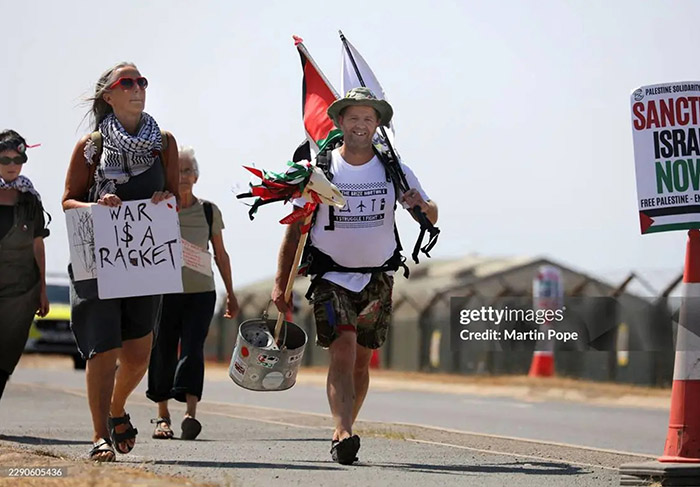
In the case of Iran, these concerns are especially significant because of the country’s strategic position in the Middle East and its relationships with other regional and international actors. A conflict involving Iran could have repercussions throughout the region. It could affect neighboring countries, international shipping, energy markets, and relations among major world powers. For British protesters, allowing military bases in the United Kingdom to contribute to such operations therefore raises questions about Britain’s responsibility for the broader consequences.
The protesters also emphasized the importance of diplomacy. Rather than relying on military force, they called for political negotiations and peaceful efforts to resolve disputes. This approach reflects a central principle of the international anti-war movement: that military action should not be treated as the first or inevitable response to international disagreements.
Diplomacy can be difficult, especially when governments have sharply conflicting interests. Negotiations may take time, and there may be serious disagreements over security, sovereignty, nuclear policy, regional influence, or economic sanctions. Nevertheless, anti-war activists argue that these difficulties do not justify abandoning diplomatic efforts. They believe that even when negotiations are complicated, maintaining channels of communication can reduce the risk of miscalculation and escalation.