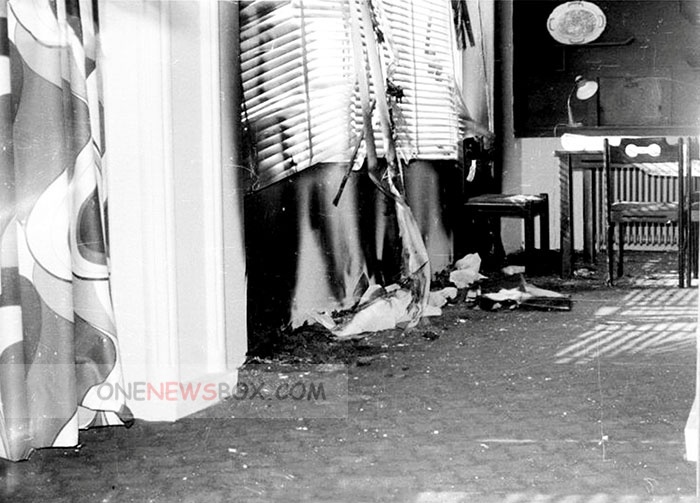
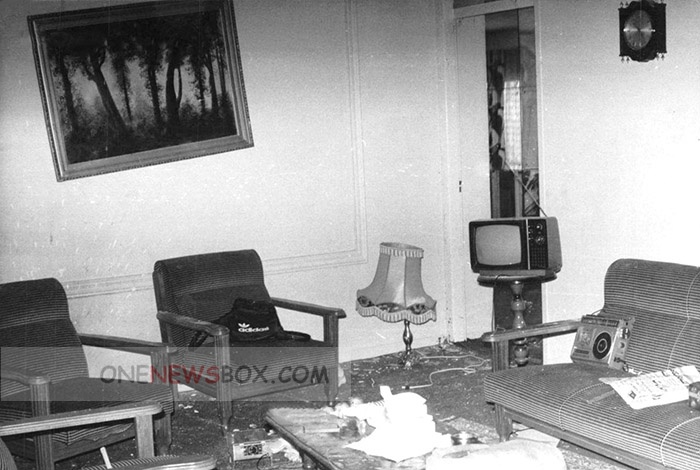
[custom_adv] Mousa Khiabani was a leading member of the People's Mujahedin of Iran (MEK) and the commander of its armed wing from 1979 to 1982, when he was killed in action.Khiabani has been described as "Massoud Rajavi's right-hand man" and "second-in-command". [custom_adv] According to Ervand Abrahamian, along with Rajavi, he acted as the organization's post-1979 spokesman and viewed as equal to Rajavi by the outsiders, despite the fact that MEK insiders knew Rajavi to be pre-eminent. [custom_adv] Khiabani was born into a bazaari family in Tabriz in 1947, he frequently participated in the Moharram rituals.[2] He studied physics at the University of Tehran. [custom_adv] Trained in guerilla warfare in Lebanon, he was sentenced to life imprisonment in 1972 for his activities with the MEK, however he was released in 1979 following Iranian Revolution. [custom_adv] He ran for a seat in the 1979 constitutional and 1980 parliamentary elections from his hometown, however he was defeated.On 8 February 1982, the Islamic Revolutionary Guard Corps raided Khiabani's safe house in northern Tehran and after three hours of gunshots, Khiabani and his wife Azar Rezaei along with other fellow MEK members were killed. [custom_adv] After the Islamic Revolution, the MEK grew quickly, becoming "a major force in Iranian politics".The group supported the revolution in its initial phases. The MEK launched an unsuccessful campaign supporting total abolition of Iran's standing military, the Islamic Republic of Iran Army, in order to prevent a coup d'état against the system. They also claimed credit for infiltration against the Nojeh coup plot. [custom_adv] It participated in the referendum held in March 1979. Its candidate for the head of the newly founded council of experts was Massoud Rajavi in the election of August 1979. However, he lost the election.By 1980, the MEK was under the control of Massoud Rajavi, one of the few surviving members of the MEK’s Central cadre. [custom_adv] Although allied with Khomeini against the shah, Khomeini "disliked the MEK’s philosophy, which combined Marxist theories of social evolution and class struggle with a view of Shiite Islam that suggested Shiite clerics had misinterpreted Islam and had been collaborators with the ruling class". [custom_adv] Rajavi became allied with Iran’s new president, Abolhassan Banisadr, elect in January 1980.After the fall of the Shah, Khomeini had little use for the MEK. The MEK was then joined by other groups that opposed the new constitution, including the People's Fedayeen and the Muslim People's Republican Party. Despite the opposition, the 3 December 1979 referendum vote approved the new constitution. [custom_adv] By early 1981, Iranian authorities then closed down MEK offices, outlawed their newspapers, prohibited their demonstrations, and issued arrest warrants for the MEK leaders, forcing the organization go underground once again. According to Professor Cheryl Bernard, in 1981, a mass execution of political prisoners was carried out by the Islamic Republic, and the MEK fled splitting into four groups. [custom_adv] One of the groups went underground remaining in Iran, the second group left to Kurdistan, the third group left to other countries abroad, and the remaining member were arrested, imprisoned or executed. Thereafter, the MEK took armed opposition against Khomeini's Islamic Republic.