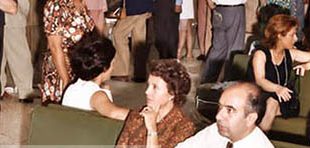
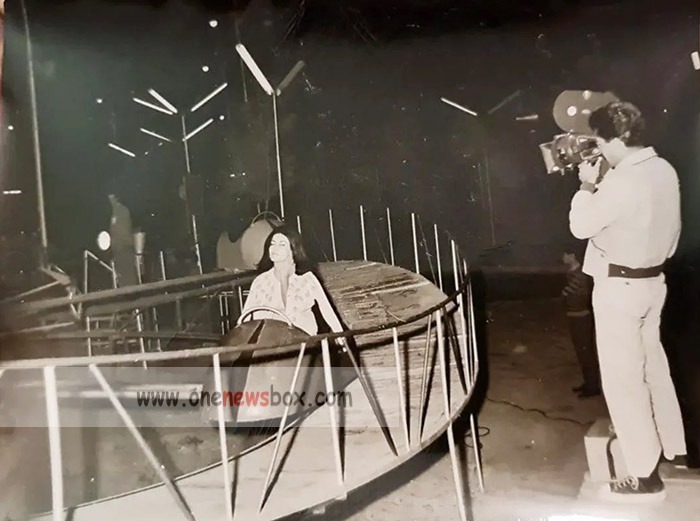
Behind the scenes images from the movie “Goodbye Tehran”
Mitra’s journey from a domestic worker to a nurse parallels the empowerment of women who sought purpose beyond domestic confines. Khachikian’s portrayal of her transformation is both sympathetic and progressive, emphasizing personal growth over romantic dependency.
3. Class Divide and Emotional Boundaries
The love between Azar and Behrouz is burdened by class differences. As a servant, Azar’s affection is constrained by social hierarchy. Her silence reflects not weakness but the deep internalization of social barriers that defined relationships in mid-20th-century Iran. Behrouz’s foreign marriage further underscores the tension between Iran’s traditional values and Western modernity.
Through their eventual reunion, Khachikian challenges the rigidity of class boundaries, suggesting that true love and human connection exist beyond social status.
4. The City and the Self
Tehran and Shiraz serve as contrasting symbols in the film. Tehran represents a city of ambition, materialism, and emotional confinement — a place where Azar’s love is stifled. Shiraz, by contrast, embodies healing, purity, and transformation. By leaving Tehran, Azar symbolically frees herself from the emotional and societal chains that once bound her.
The title Goodbye Tehran thus carries multiple meanings: it signifies not only Azar’s physical departure but also her farewell to illusion, dependence, and emotional blindness.