Another factor shaping China’s calculations is the rapid expansion of relations between North Korea and Russia. In recent years, Moscow and Pyongyang have moved closer together, driven in part by their shared opposition to Western policies.
High-level exchanges between Russian and North Korean officials have increased significantly. Economic cooperation, military contacts, and political coordination have all expanded. The relationship gained additional momentum following Russia’s confrontation with Western countries over the conflict in Ukraine.
For North Korea, closer ties with Russia offer opportunities to diversify its international partnerships and reduce dependence on China. Access to Russian technology, energy resources, and diplomatic support could provide important benefits.
For China, however, the growing Russia–North Korea relationship presents both opportunities and challenges. On one hand, cooperation among the three countries may contribute to a broader alignment against Western influence. On the other hand, Beijing may be concerned about losing some of its traditional influence over Pyongyang.
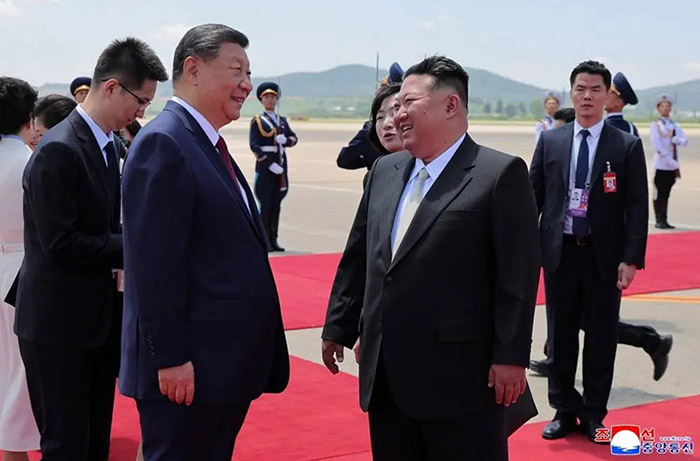
Xi Jinping’s visit can therefore be interpreted as an effort to reaffirm China’s central role in North Korea’s foreign relations. By expanding cooperation and demonstrating political support, Beijing seeks to ensure that its relationship with Pyongyang remains strong despite North Korea’s increasingly active engagement with Moscow.