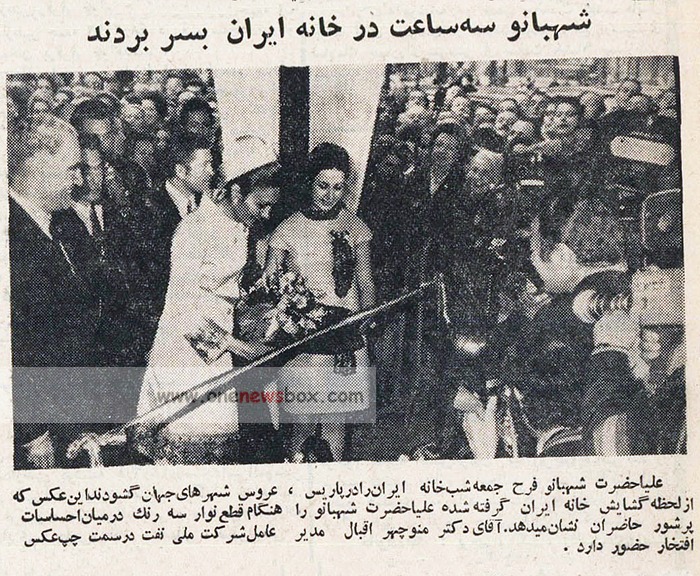
The creation of the House of Iran reflected a broader vision that characterized Iran’s international cultural policy during the 1960s. The Shah and Queen Farah believed that Iran’s modernization should be accompanied by an increased appreciation abroad for the nation’s historical legacy and cultural accomplishments. While economic development and industrial growth were transforming the country, Iranian leaders sought to ensure that the world also recognized Iran’s ancient contributions to civilization.
To achieve these goals, the House of Iran was conceived as much more than a cultural center. It was intended to become a permanent bridge between Iran and Europe. Through exhibitions, lectures, educational programs, artistic presentations, and publications, the institution would foster greater understanding between peoples and encourage cultural exchange.
The center organized regular exhibitions featuring examples of Iranian art, archaeology, and craftsmanship. Visitors could view traditional Persian carpets, miniature paintings, woven textiles, metalwork, ceramics, and other forms of artistic expression that had developed over centuries. These exhibitions highlighted the extraordinary diversity and sophistication of Iranian artistic traditions.