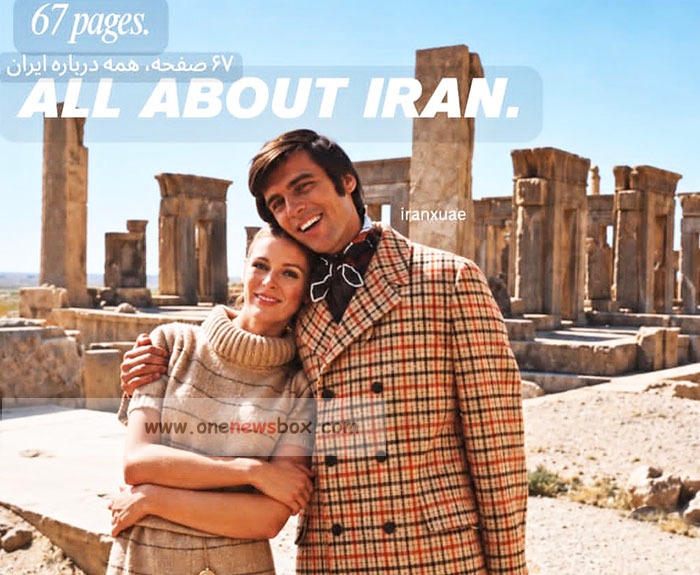
The growing urban middle class played an important role in the development of consumer fashion. Government employees, professionals, businesspeople, university students, and families with access to international goods increasingly encountered new clothing styles. Travel abroad, foreign films, imported products, and international media broadened their awareness of global fashion.
However, modernization did not affect all parts of Iran equally. Wealthy urban residents often had greater access to imported garments and designer clothing than rural communities or families with limited incomes. Traditional clothing remained common in many regions, and Western-inspired fashion was not universally accepted or adopted.
Consequently, the fashion landscape of pre-revolutionary Iran was characterized by diversity rather than complete Westernization. Modern clothing existed alongside traditional garments, and individuals often combined elements from both worlds.
2. Western Influence and the Importance of Parisian Fashion
European fashion, especially French fashion, exercised considerable influence on the appearance of Iran’s urban elite and fashion-conscious middle classes. Paris had long been regarded as an international center of haute couture, luxury design, and sophisticated dress. French designers established trends that influenced clothing production and consumption far beyond Europe, including in Iran.