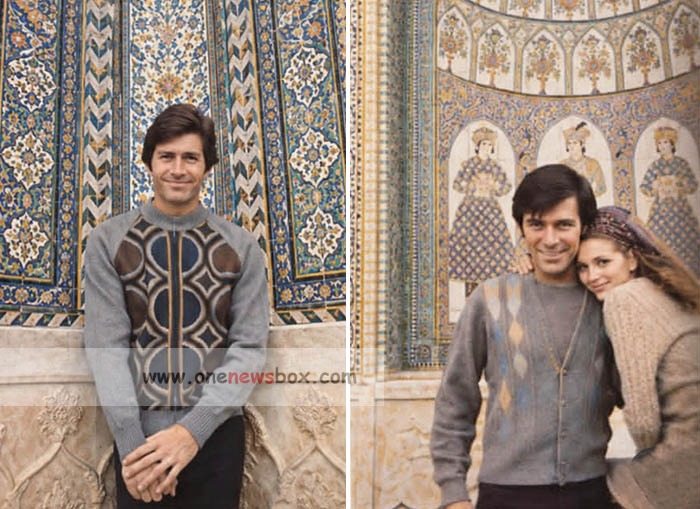
International fashion photography also influenced how modernity was represented. Carefully styled models, luxurious settings, and polished clothing communicated ideas about sophistication and social distinction. These images could inspire Iranian designers, tailors, shopkeepers, and customers who wanted to adapt contemporary trends to their own wardrobes.
Nevertheless, the relationship between Western fashion and Iranian clothing was not simply a process of copying foreign designs. Local preferences, available materials, climate, tailoring traditions, and individual creativity affected how imported trends were interpreted. Iranian consumers selected and modified international styles according to their circumstances.
This interaction produced a distinctive urban fashion culture in which international trends were incorporated into Iranian society without entirely eliminating local influences.
3. Farah Pahlavi and the Image of Modern Iranian Elegance
Farah Pahlavi, the wife of Mohammad Reza Shah, occupied a prominent position in the public presentation of modern Iranian style. As empress, she participated in official ceremonies, cultural events, diplomatic visits, and public appearances that attracted attention from domestic and international media.