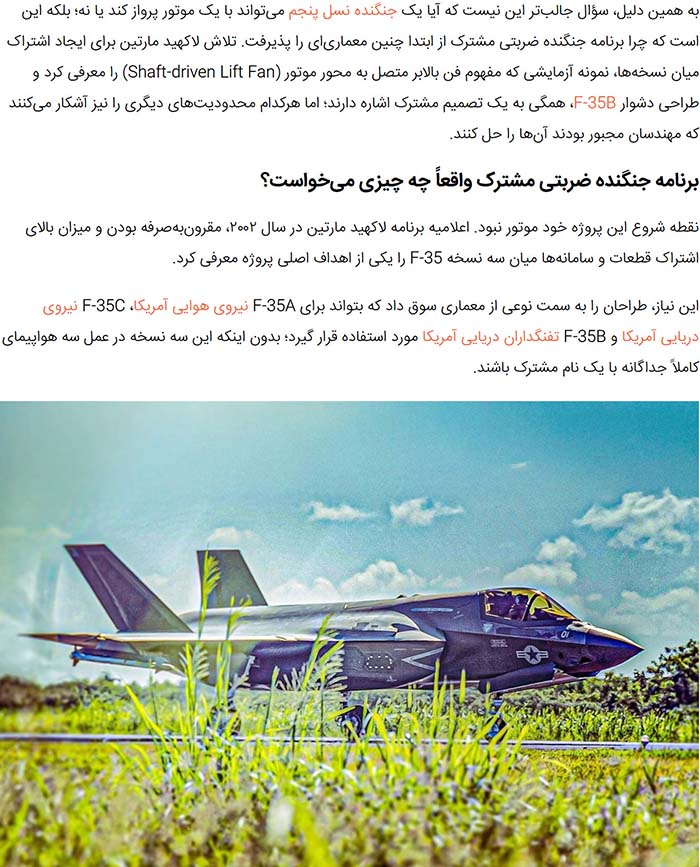
One possible solution would have been to install multiple engines, with one or more engines dedicated to vertical lift. Instead, the Joint Strike Fighter program pursued a very different approach. The F-35B would use one main engine, mechanically connected to a lift fan positioned behind the cockpit. The result was a propulsion system unlike that of virtually any conventional fighter aircraft.
The explanation for this decision begins not with the engine itself, but with the philosophy of the Joint Strike Fighter program.
The Joint Strike Fighter’s Commonality Challenge
The Joint Strike Fighter program was established around a difficult proposition: could one basic aircraft design serve the dramatically different requirements of the U.S. Air Force, Navy, and Marine Corps?
The three services had different operational priorities.
The Air Force needed a conventional fighter capable of operating from traditional runways. The Navy required an aircraft able to withstand the demanding environment of aircraft carriers, including catapult launches and arrested landings. The Marine Corps wanted an aircraft capable of operating from shorter runways and amphibious assault ships, where conventional runways might not be available.
These requirements could easily have resulted in three completely different aircraft.
Instead, the Joint Strike Fighter concept attempted to maximize commonality. The objective was not to make every component identical, because that would have been impossible given the radically different operational requirements. Rather, designers sought to create a common aircraft architecture in which a large proportion of components, systems, software, manufacturing processes, and technologies could be shared.