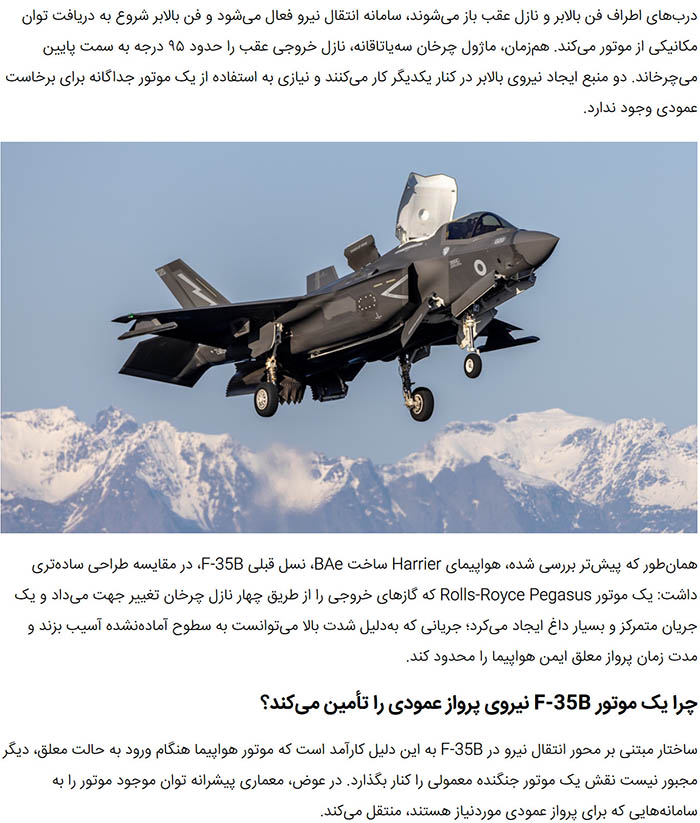
The F-35B’s STOVL system is considerably more complicated than simply rotating an engine nozzle.
At the center of the aircraft is the F135 engine. Forward of the engine is a vertically mounted lift fan. A mechanical drive system connects the engine to the fan.
During normal flight, the aircraft behaves broadly like a conventional jet-powered fighter. The engine produces thrust through its rear exhaust nozzle, and the aircraft flies using aerodynamic lift generated by its wings and body.
When the aircraft transitions into STOVL mode, however, several systems operate together.
Doors on the upper surface of the aircraft open to expose the lift-fan inlet. At the same time, doors and mechanisms surrounding the rear propulsion system change position. The lift-fan drive system engages, allowing mechanical power from the engine to rotate the fan.
The fan draws air from above the aircraft and accelerates it downward, producing a substantial amount of vertical lift.
At the rear, the F-35B uses a three-bearing swivel module that allows the exhaust nozzle to rotate downward. Instead of sending the majority of the engine’s exhaust directly behind the aircraft, the nozzle can redirect it toward the ground.
The result is a two-source lift system.
The forward lift fan produces cold-air vertical thrust, while the rear exhaust system produces hot-gas thrust. Together, these sources generate the downward force necessary for hovering and vertical landing.
The aircraft also uses additional control mechanisms to maintain stability during this unusual flight regime.